
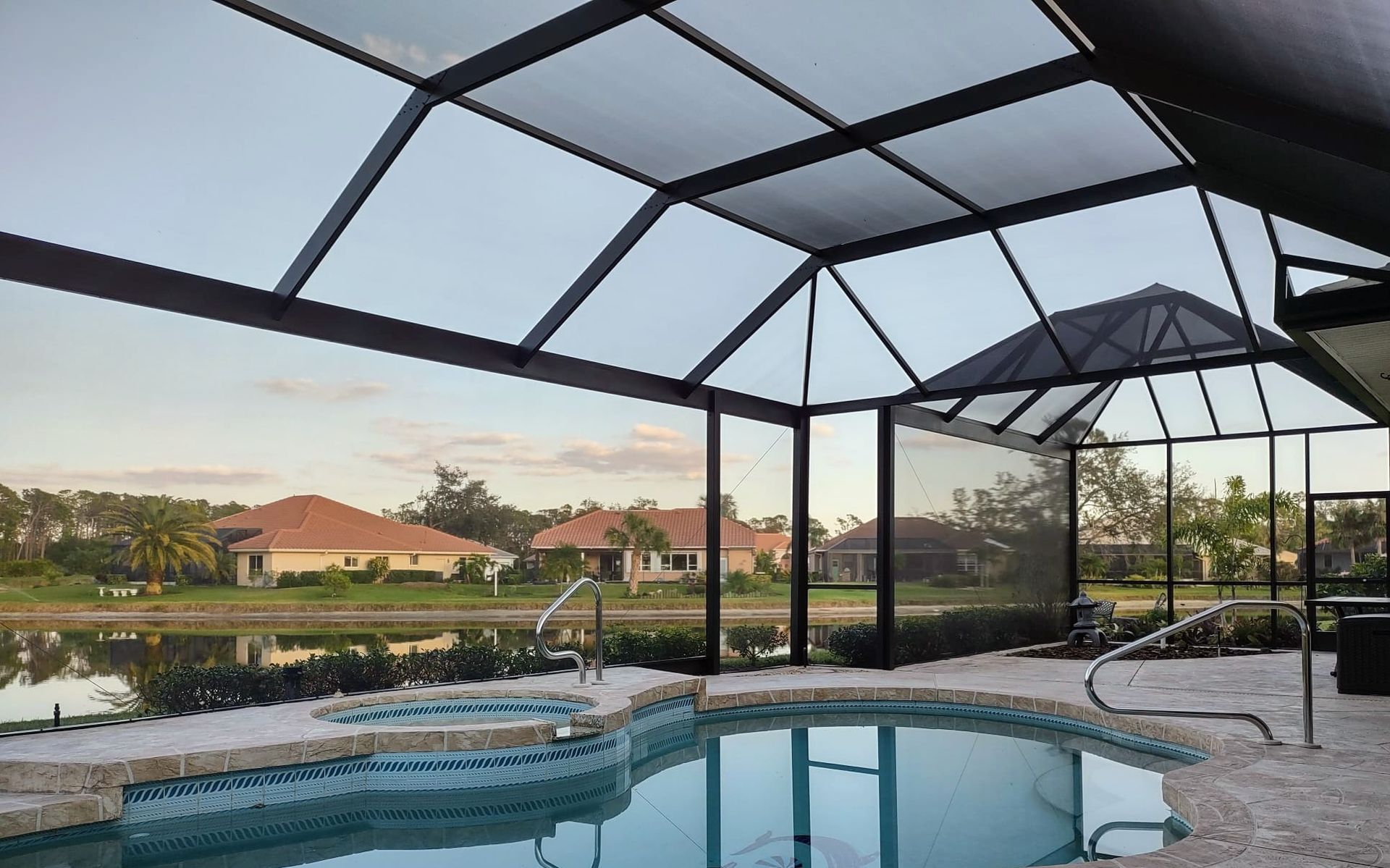
Protect Your Pool From Florida Elements
Licensed pool cage installation services for residential properties across the area.
If you own a pool in Bradenton, Punta Gorda, Parrish or a surrounding area, you already know how quickly insects gather around standing water and how debris from palm fronds and landscaping can turn daily maintenance into a constant chore. A professionally installed pool cage addresses both issues while reducing the intensity of direct sun exposure during the hottest months of the year. Kml Screen & Painting builds custom aluminum pool enclosures designed to fit your property's layout and meet the structural demands of Florida's wind and weather patterns.
Each installation follows current Florida building codes and wind-load requirements, which determine the frame thickness, anchor points, and mesh grade used in your enclosure. You work directly with the installation team during the design consultation to select screen type, door placement, and structural height based on your pool shape and outdoor furniture arrangement. This service is typically chosen by homeowners adding a new pool, replacing a structure that sustained storm damage, or upgrading an older enclosure that no longer meets current code standards.
If you are planning a pool cage installation or need to replace an aging enclosure, reach out to Kml Screen & Painting to schedule a consultation and discuss layout options for your property.
How the Structure Gets Built and Anchored
Your pool cage is constructed using extruded aluminum framing, which resists corrosion in humid conditions and supports the mesh screening without warping over time. The installation crew measures your pool deck and marks anchor locations before drilling and securing the frame to your concrete or paver surface. You choose between standard fiberglass mesh, which blocks most insects and small debris, or upgraded no-see-um mesh, which stops even the smallest biting insects from entering the enclosure.
Once the frame is up and the screening is stretched and secured, you will notice that leaves, twigs, and airborne pollen no longer settle directly into the pool water. The enclosure also reduces the amount of sunscreen and chlorine your pool requires, since the mesh filters a portion of UV rays before they reach the water surface. These changes become especially noticeable during fall and spring when wind carries the most organic debris across your yard.
The structure includes at least one access door with a self-closing latch, and additional doors can be added if your pool connects to multiple outdoor areas. The crew inspects the frame alignment and tension across all panels before completing the project, and you receive documentation confirming that the installation meets local permit and code requirements. Kml Screen & Painting can also coordinate painting and long-term maintenance services if you want to integrate your new enclosure with broader exterior updates.
We Know This Is a Big Addition
Homeowners planning a pool cage installation often have questions about permitting, material durability, and how the structure will affect their outdoor space visually and functionally, so the following answers address the most common concerns that come up during the consultation process.
What building codes apply to pool cage installation in Florida?
Your pool enclosure must meet Florida Building Code requirements for wind load, which vary by county and proximity to the coast. Kml Screen & Painting ensures that all frame materials, anchor depths, and mesh grades comply with the codes enforced in your area.
How long does a typical pool cage installation take?
Most residential pool cage installations are completed within three to five days, depending on the size of your pool deck and the complexity of the frame design. You can use your pool during installation, though access may be limited while anchor points are being drilled and the frame is being assembled.
What type of screening works best for blocking insects?
Standard fiberglass mesh blocks most flying insects and debris, while no-see-um mesh uses a tighter weave to stop smaller biting insects. Your choice depends on how much insect pressure you experience in your area and whether you prioritize airflow or maximum insect protection.
What happens if the enclosure is damaged during a storm?
If wind or falling branches tear the screening or bend the frame, you contact Kml Screen & Painting to assess the damage and determine whether repair or panel replacement is needed. Most storm damage affects the mesh rather than the aluminum structure, and isolated tears can often be patched or re-screened without replacing the entire enclosure.
How do you ensure the pool cage matches my home's appearance?
During the design consultation, you review frame color options and select a profile height and door configuration that aligns with your home's roofline and exterior style. The installation crew adjusts panel spacing and door placement to work with your existing patio furniture, outdoor kitchen, and landscaping layout.
If your pool is attracting too much debris or you are preparing to replace an outdated enclosure that no longer meets code standards, contact Kml Screen & Painting to schedule an on-site consultation and review layout options that fit your property and budget.